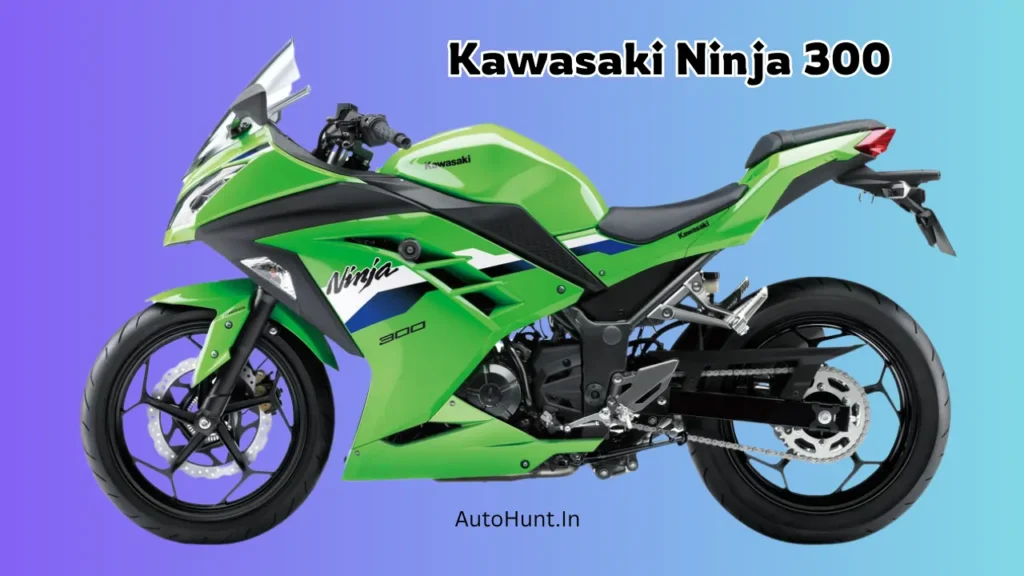
If you are planning to buy the Kawasaki Ninja 300 in 2026, here is the clear answer.
It offers a smooth 296cc twin-cylinder engine, stable highway performance, premium build quality, and dependable reliability.
The Kawasaki Ninja 300 Price In India is positioned in the premium 300cc segment, and it delivers real-world mileage of around 25–30 km/l.
It is ideal for beginners upgrading from 150–200cc bikes who want refinement instead of raw aggression.
However, if you want maximum power and modern electronics, you should compare rivals before deciding.
Now let’s break everything down in detail so you can confidently decide whether this motorcycle is right for you.
Kawasaki Ninja 300 – Detailed Specifications (2026)
| Category | Details |
|---|---|
| Model Name | Kawasaki Ninja 300 |
| Latest Model | Kawasaki Ninja 300 New Model 2026 |
| Bike Type | Fully Faired Sports Motorcycle |
| Engine Type | 296cc, Liquid-Cooled, 4-Stroke, Parallel Twin |
| Engine Configuration | DOHC, 8-Valve |
| Kawasaki Ninja 300 296cc Engine Output | Approx. 39 PS @ 11,000 rpm |
| Torque | Approx. 26.1 Nm @ 10,000 rpm |
| Transmission | 6-Speed Manual |
| Clutch Type | Assist And Slipper Clutch |
| Fuel System | Fuel Injection |
| Emission Standard | BS6 Compliant |
| Cooling System | Liquid Cooled |
| Kawasaki Ninja 300 Top Speed | Approx. 160 km/h |
| Kawasaki Ninja 300 0-100 Kmph | Approx. 6–7 seconds |
| Kawasaki Ninja 300 Mileage | 25–30 km/l (real-world average) |
| Kawasaki Ninja 300 City Mileage | Approx. 24–27 km/l |
| Kawasaki Ninja 300 Highway Mileage | Approx. 28–30 km/l |
| Kawasaki Ninja 300 Fuel Tank Capacity | 17 Litres |
| Riding Range | Approx. 400–450 km (depending on riding style) |
| Frame Type | Diamond Frame |
| Front Suspension | Telescopic Fork |
| Rear Suspension | Bottom-Link Uni-Trak with Gas-Charged Shock |
| Front Brake | 290 mm Disc |
| Rear Brake | 220 mm Disc |
| Safety Feature | Dual-Channel ABS |
| Tyre Type | Tubeless |
| Front Tyre | 110/70-17 |
| Rear Tyre | 140/70-17 |
| Wheel Type | Alloy Wheels |
| Kawasaki Ninja 300 Kerb Weight | Approx. 179 kg |
| Seat Height | Approx. 780 mm |
| Ground Clearance | Approx. 140 mm |
| Instrument Console | Semi-Digital |
| Headlamp Type | Twin Projector Headlamps |
| Body Style | Aerodynamic Full Fairing |
| Kawasaki Ninja 300 Colours | Lime Green, Ebony, and other dual-tone options (may vary by year) |
| Kawasaki Ninja 300 Price In India | Approx. ₹3.17 Lakh (Ex-Showroom) |
| Kawasaki Ninja 300 On Road Price | Approx. ₹3.5–3.7 Lakh (Varies by City) |
| Kawasaki Ninja 300 Price Ahmedabad | Depends on RTO & Insurance (Typically slightly above ex-showroom + local taxes) |
| Kawasaki Ninja 300 EMI | Depends on loan amount & tenure |
| Kawasaki Ninja 300 Down Payment | Usually 10–20% of ex-showroom price |
| Kawasaki Ninja 300 Service Cost | Higher than single-cylinder bikes (Premium Segment) |
| Kawasaki Ninja 300 Maintenance Cost | Moderate to High depending on usage |
| Rivals | KTM RC 390, Yamaha R3, TVS Apache RR 310 |
Disclaimer: All specifications, prices, and performance figures mentioned above are based on officially available manufacturer data and widely reported market information for the Indian 2026 model. Prices, mileage, features, and specifications may vary depending on location, dealership, riding conditions, and future updates from the manufacturer. Always confirm the latest details with an authorized Kawasaki dealership before making a purchase decision.
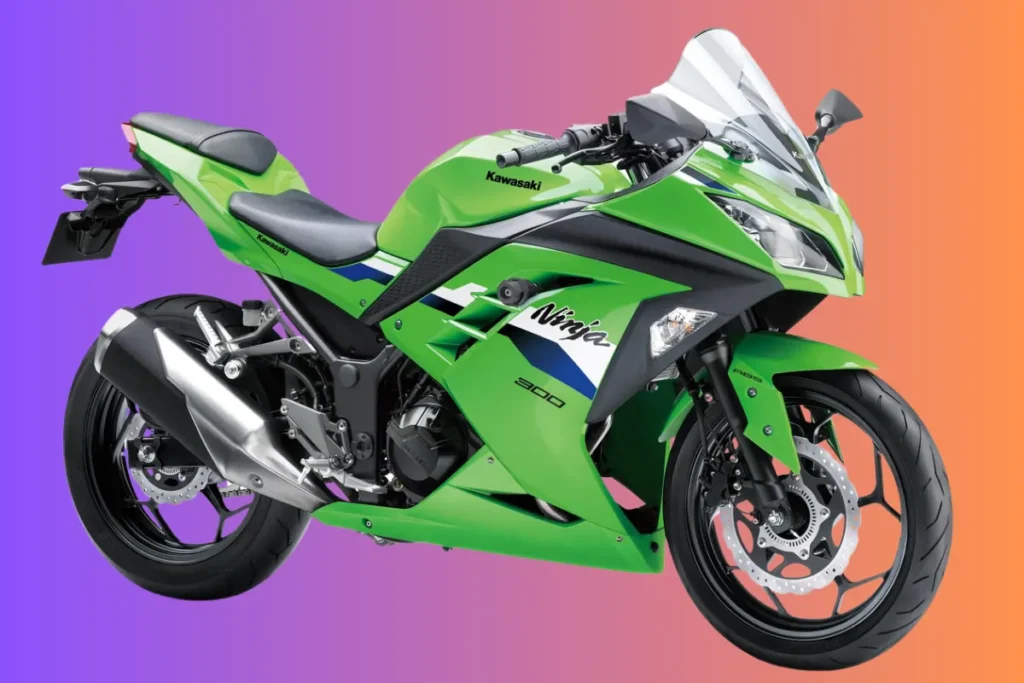
Kawasaki Ninja 300 Overview: Why It Still Matters in 2026
The Indian 300cc sports bike segment has evolved rapidly. Many bikes now offer TFT displays, traction control, ride modes, and aggressive styling. Yet, the Kawasaki Ninja 300 continues to sell.
Why?
Because refinement never goes out of style.
Unlike most rivals that use single-cylinder engines, this motorcycle features a Kawasaki Ninja 300 Twin Cylinder setup. That instantly changes the riding experience. The engine feels smoother, less buzzy, and more stable at high speeds.
The Kawasaki Ninja 300 New Model 2026 does not bring drastic mechanical updates, but it continues with refreshed graphics and proven reliability. Sometimes, consistency is more valuable than constant change.
If you value smooth performance, strong brand reliability, and balanced dynamics, this bike still makes sense.
Kawasaki Ninja 300 Price In India & On-Road Breakdown
Let’s talk numbers.
The Kawasaki Ninja 300 Price In India (ex-showroom) sits in the mid-premium bracket of the 300cc segment. While it is not the cheapest option, it reflects Kawasaki’s brand positioning.
However, your final Kawasaki Ninja 300 On Road Price depends on:
- State RTO charges
- Insurance package
- Extended warranty
- Accessories
For example, Kawasaki Ninja 300 Price Ahmedabad may vary slightly from Delhi or Bangalore due to tax differences.
If you plan to finance the bike, here’s what to consider:
- Kawasaki Ninja 300 Down Payment generally ranges between 10–20 percent.
- Kawasaki Ninja 300 EMI depends on interest rate and tenure.
When doing a Kawasaki Ninja 300 Price Comparison with competitors, remember to compare overall ownership cost, not just ex-showroom price.
Kawasaki Ninja 300 Engine & Real Performance Explained
The heart of the motorcycle is its 296cc parallel twin motor.
 Quantum Energy Plasma | Best Affordable Electric Scooter in India | Specs, Price, Features & Review
The Kawasaki Ninja 300 Engine is liquid-cooled, fuel-injected, and tuned for smooth power delivery across the rev range. The Kawasaki Ninja 300 296cc Engine produces power in a linear manner, which helps beginners gain confidence.
Because it is a twin-cylinder unit, you get:
- Reduced vibrations
- Smoother throttle transitions
- Better highway cruising comfort.
In real-world conditions:
- Kawasaki Ninja 300 Acceleration feels progressive and controlled.
- Kawasaki Ninja 300 0-100 Kmph takes around 6–7 seconds (approximate real-world figure).
- Kawasaki Ninja 300 Top Speed is around 160 km/h depending on riding conditions.
It is not the most aggressive bike in the segment, but it is one of the smoothest.
Kawasaki Ninja 300 Mileage: City vs Highway Reality
Fuel efficiency is an important concern in India.
The Kawasaki Ninja 300 Mileage typically ranges between 25–30 km/l in mixed riding conditions.
Let’s break it down:
- Kawasaki Ninja 300 City Mileage: around 24–27 km/l depending on traffic.
- Kawasaki Ninja 300 Highway Mileage: around 28–30 km/l when cruising steadily.
- Kawasaki Ninja 300 Real Mileage depends heavily on throttle discipline.
The Kawasaki Ninja 300 Fuel Tank Capacity is approximately 17 litres, which provides a practical touring range.
For a twin-cylinder sports motorcycle, these numbers are respectable.
Kawasaki Ninja 300 Specs & Technical Specifications
Understanding Kawasaki Ninja 300 Specs helps you evaluate its true capability.
Here are key Kawasaki Ninja 300 Specifications:
Engine & Transmission
- 296cc liquid-cooled parallel twin.
- 6-speed gearbox
- Fuel injection system
Performance & Chassis
- Lightweight diamond frame
- Telescopic front forks
- Rear mono-shock suspension
- Front and rear disc brakes.
Safety & Control
- Kawasaki Ninja 300 ABS (dual-channel system).
- Kawasaki Ninja 300 Assist And Slipper Clutch.
Dimensions
- Kawasaki Ninja 300 Kerb Weight around 179 kg.
- Sporty riding geometry.
The assist and slipper clutch reduces clutch effort and prevents rear-wheel hop during aggressive downshifts. This improves control and confidence, especially for beginners.
Kawasaki Ninja 300 Features: What You Actually Get
While the bike may not have modern electronics like traction control, it still offers essential and practical features.
Key Kawasaki Ninja 300 Features include:
- Twin projector headlamps
- Semi-digital instrument cluster
- Dual-channel ABS
- Assist and slipper clutch
- Sporty fairing with aerodynamic design.
- Comfortable split seat.
The Kawasaki Ninja 300 BS6 compliance ensures cleaner emissions and smoother throttle calibration.
Although it lacks ride modes and TFT display, many riders appreciate its mechanical simplicity.
Design, Colours & Road Presence
One of the strongest points of this bike is its iconic Ninja styling.
The fairing design is inspired by larger Ninja models. The front fascia looks aggressive, while the tail section remains sharp and sporty.
Kawasaki Ninja 300 Colours usually include the signature lime green shade along with other dual-tone options depending on the year. The Kawasaki Ninja 300 Latest Update mainly focuses on cosmetic refresh rather than mechanical overhaul.
Even in 2026, it still looks like a proper sports motorcycle.
Riding Comfort & Practical Usability
Sports bikes often compromise comfort. However, this model strikes a reasonable balance.
The riding posture is slightly committed but manageable for daily use. The seat height allows average Indian riders to place both feet on the ground comfortably.
Highway stability is impressive. At cruising speeds of 100–120 km/h, the engine feels relaxed.
For city use, the bike handles traffic reasonably well, although heat management can be noticeable in peak summer.

Overall, it works well for:
- Daily commuting
- Weekend rides
- Entry-level touring
Kawasaki Ninja 300 Service Cost & Long-Term Ownership
Before buying, you must understand long-term expenses.
Kawasaki Ninja 300 Service Cost is generally higher than single-cylinder bikes due to twin-cylinder complexity and brand positioning.
Kawasaki Ninja 300 Maintenance Cost includes:
- Regular engine oil changes
- Periodic valve checks
- Chain maintenance
- Brake pad replacements.
However, in many Kawasaki Ninja 300 Ownership Review experiences, owners report strong reliability when servicing is done on time.
Spare parts availability has improved over the years, making ownership easier than before.
Kawasaki Ninja 300 Vs KTM RC 390
In the Kawasaki Ninja 300 Vs KTM RC 390 comparison:
- RC 390 offers more horsepower and advanced electronics.
- Ninja 300 offers smoother engine refinement and relaxed touring comfort.
If you want track-focused performance, RC 390 is attractive. If you want daily usability and refinement, Ninja 300 makes more sense.
Kawasaki Ninja 300 Vs Yamaha R3
When comparing Kawasaki Ninja 300 Vs Yamaha R3:
- Both are twin-cylinder motorcycles.
- R3 feels slightly sharper in power delivery.
- Ninja 300 offers proven reliability in Indian conditions.
Choice depends on budget and brand preference.
Kawasaki Ninja 300 Vs Apache RR 310
In the Kawasaki Ninja 300 Vs Apache RR 310 battle:
- RR 310 provides modern features like riding modes and TFT display.
- Ninja 300 focuses on mechanical smoothness and brand legacy.
If technology matters most, RR 310 wins. If refinement is your priority, Ninja 300 stands strong.
Is Kawasaki Ninja 300 Worth It in 2026?
Yes, but only for the right buyer.
If you want a refined twin-cylinder experience, stable highway ride, and proven reliability, this bike remains a strong option.
However, if you expect advanced electronics and maximum power per rupee, you should explore alternatives.
In simple words, this motorcycle is about balance and smoothness, not aggression.
Conclusion
The Kawasaki Ninja 300 continues to hold its position in India because of one major reason — refinement. Its twin-cylinder engine delivers smooth performance that many single-cylinder rivals cannot match. The bike offers stable highway dynamics, decent fuel efficiency, solid braking with ABS, and dependable long-term reliability.
While the price may feel slightly premium, the overall ownership experience justifies the investment for riders who value comfort and smoothness over raw numbers.
Before making a decision, take a test ride. Feel the engine. Experience the smooth throttle. That is where this motorcycle truly shines.
Frequently Asked Questions (FAQs)
What is the Kawasaki Ninja 300 Top Speed?
It can reach around 160 km/h under ideal riding conditions.
What is the real mileage?
Expect around 25–30 km/l depending on riding style.
Is it suitable for beginners?
Yes, due to its linear power delivery and smooth engine.
What is the fuel tank capacity?
Approximately 17 litres.
Does it come with ABS?
Yes, it comes with dual-channel ABS.
Is maintenance expensive?
It is slightly higher than single-cylinder bikes but manageable with proper servicing.
Is it good for long rides?
Yes, its stable chassis and smooth engine make it suitable for touring.
Is it better than KTM RC 390?
It depends on your preference. RC 390 offers more power, while Ninja 300 offers better refinement.

Aditya Misra is a car and bike lover who enjoys everything about automobiles. He has a lot of experience with both new and old vehicles and loves sharing his knowledge and excitement. From trying out the latest models to fixing up classic bikes, Aditya’s writing is full of helpful tips and fun stories for anyone who loves cars and bikes.