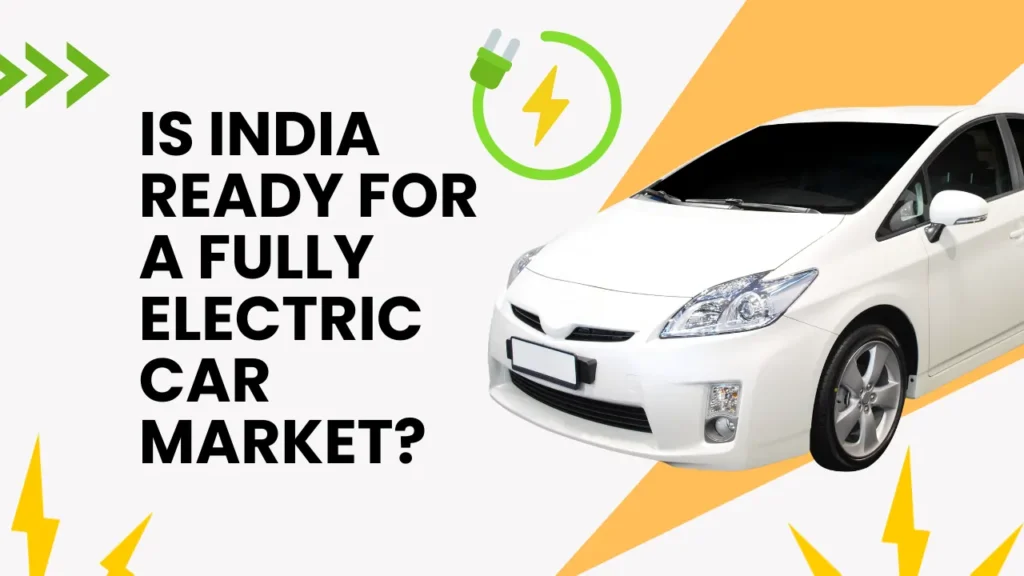
India is not fully ready yet, but it is closer than ever before.
The country has built a strong EV foundation through policies, rising electric car sales, charging networks, and new battery technology. However, challenges like charging reach, battery supply, electricity load, and pricing still prevent India from becoming a completely electric car nation today.
That said, the transition is already underway — and it is accelerating faster than most people realize.
India is no longer asking if it will go electric.
It is now asking how fast.
Let’s break down the real story.
The Rise of Electric Cars in India
Electric Cars In India have moved from being experimental to becoming mainstream. Just a few years ago, electric vehicles were seen as slow, limited, and expensive. Today, they are becoming normal on Indian roads.
The India EV Market is growing because buyers want three things:
- Lower running cost
- Cleaner transportation
- Future-proof vehicles.
Petrol and diesel prices have pushed people to look for alternatives. At the same time, cities are facing pollution crises. That is why electric mobility is no longer a luxury — it is a necessity.
The Electric Vehicle Industry India is now supported by large carmakers, startups, and the government. This combination has created one of the fastest EV transitions in the world.
Why India Is Moving Toward a Fully Electric Car Market
A Fully Electric Car Market is not just about cars. It is about national survival and economic stability.
India imports most of its oil. Every price rise hurts the economy. Electric mobility allows the country to use domestic energy instead of foreign fuel.
At the same time, India is one of the most polluted nations in the world. Electric cars do not release smoke or exhaust. That makes them ideal Green Vehicles India and Zero Emission Cars for crowded cities.
As India increases Renewable Energy For EVs like solar and wind, electric cars also become Clean Energy Vehicles.
This is why India’s EV push is not optional — it is strategic.
Government Policies Are Fueling EV Adoption
Electric Vehicle Adoption India is being pushed heavily by the government.
The FAME EV Scheme is the backbone of India’s electric transition. It provides direct subsidies to EV buyers, making electric cars more affordable.
EV Subsidy India can reduce the price of an electric car by a large amount. Many state governments also give EV Tax Benefits India such as:
- Lower road tax
- Lower registration fees.
- Free parking in some cities.
The Government EV Policy India also supports charging stations, battery factories, and local EV manufacturing. This helps bring down costs and improve availability.
Why Many Indians Are Still Choosing Petrol Cars Over EVs.
What the India EV Market Looks Like Today
EV Sales India are growing every year at a rapid pace. While petrol cars still dominate, electric car sales are rising faster.
Electric Car Trends India show that buyers now prefer EVs for city driving, office commuting, and even family use.
Electric SUV India models are also gaining popularity. People no longer see EVs as small or weak.
Tata Electric Cars and Mahindra Electric Cars currently dominate the market. Their EVs have proved that Indian buyers are ready when the product is right.
![BS6 Vs BS4 Engines – Key Differences, Emission Impact & Which One to Buy in 2025 | [Fuel Efficiency, Pollution, Cost Guide]](https://autohunt.in/wp-content/uploads/2025/05/BS6-Vs-BS4-Engines-150x150.webp)
Many Upcoming EV Cars India from global and Indian brands are expected to enter the market soon, which will further boost competition and reduce prices.
EV Infrastructure Is the Real Test
EV Infrastructure India decides how fast electric cars can grow.
Charging Infrastructure India is improving, but it still needs to scale much faster.
EV Charging Stations India are now visible in:
- Malls
- Offices
- Highways
- Apartment complexes
- Fuel stations
Fast Charging Stations India are also increasing, allowing drivers to charge quickly during long trips.
Public Charging Stations India are essential for people who do not have private parking.
Home EV Charger India installations are becoming common. Many buyers now charge their cars overnight at home just like a smartphone.
EV Installation Cost for a home charger is reasonable and is often a one-time investment.
How Electric Car Charging Works in Real Life
Electric Car Charging India is easier than many people think.
Most people charge at home overnight. This is slow but very convenient.
Fast chargers can add large range in under an hour, which is ideal for highways and city hubs.
Smart charging systems will soon allow cars to charge when electricity demand is low, helping the grid.
This system will become more efficient as EV numbers rise.
Battery Technology Is Changing Everything
EV Battery Technology has improved more in the last five years than in the last twenty.
Lithium Ion Battery India systems are now:
- Safer
- Lighter
- Longer-lasting
- More energy dense
Electric Car Battery India usually lasts close to a decade. This removes a major fear for buyers.
 Electric vs Petrol vs CNG: What’s REALLY Best for City Driving? Uncover the Hidden Truth!
EV Range In India is no longer a problem for most users. Many modern EVs easily cross 350 km on one charge, which is enough for daily life.
Battery Production India is expanding, which will reduce costs and improve supply.
Electric Car Cost in India
Electric Car Cost In India is still higher than petrol cars, but the gap is closing.
EV Car Prices are falling because of:
- Better battery production
- Government subsidies
- Local manufacturing.
Affordable Electric Cars India are now available for middle-class buyers.
When you include fuel and service savings, EVs often become cheaper over time.
This is why many buyers are now choosing electric over petrol.
Power Grid and Energy Supply
EV Power Grid India must handle millions of charging vehicles.
EV Electricity Consumption will rise, but India is also adding large amounts of renewable energy.
Solar and wind will play a major role in powering electric cars.
This makes EVs cleaner not just at the tailpipe but across their entire lifecycle.
Manufacturing and Supply Chain
EV Manufacturing India is expanding rapidly. More factories mean:
- Lower prices
- More jobs
- Faster delivery
Battery Production India is also growing, reducing dependence on imports.
This will be critical for India’s EV independence.
Is India Truly Ready for a Fully Electric Car Market?
India is not fully ready today, but it is no longer unprepared.
Charging, affordability, grid capacity, and battery supply still need improvement. But the foundation is strong.
The EV Future In India is no longer a theory — it is already visible on the roads.
 Why Car Reels Are Going Viral on Instagram In 2026 | Secrets Behind Millions of Views & Followers
Why Electric Cars Are Now Cheaper Than Petrol Cars.
Conclusion
India is on the path to a fully electric car market. Strong government policies, rising EV sales, better charging infrastructure, and improving battery technology are all pushing the country forward. While challenges remain, the shift to electric mobility is now irreversible. The real question is not whether India will go electric, but how soon.
FAQs
Are electric cars good for Indian roads?
Yes, modern EVs are designed for Indian traffic and conditions.
Is charging an EV difficult?
No, most people charge at home or use public charging stations.
Do EVs save money?
Yes, electricity and maintenance costs are much lower.
How long do EV batteries last?
Typically 8 to 10 years.
Are enough charging stations available?
They are growing fast, but more are still needed.
Which brands lead the EV market?
Tata Motors and Mahindra currently lead.
Will electricity shortages affect EVs?
Renewable energy and smart charging will help manage demand.
When will India become fully electric?
Most experts expect major transformation by the early 2030s.

Aditya Misra is a car and bike lover who enjoys everything about automobiles. He has a lot of experience with both new and old vehicles and loves sharing his knowledge and excitement. From trying out the latest models to fixing up classic bikes, Aditya’s writing is full of helpful tips and fun stories for anyone who loves cars and bikes.