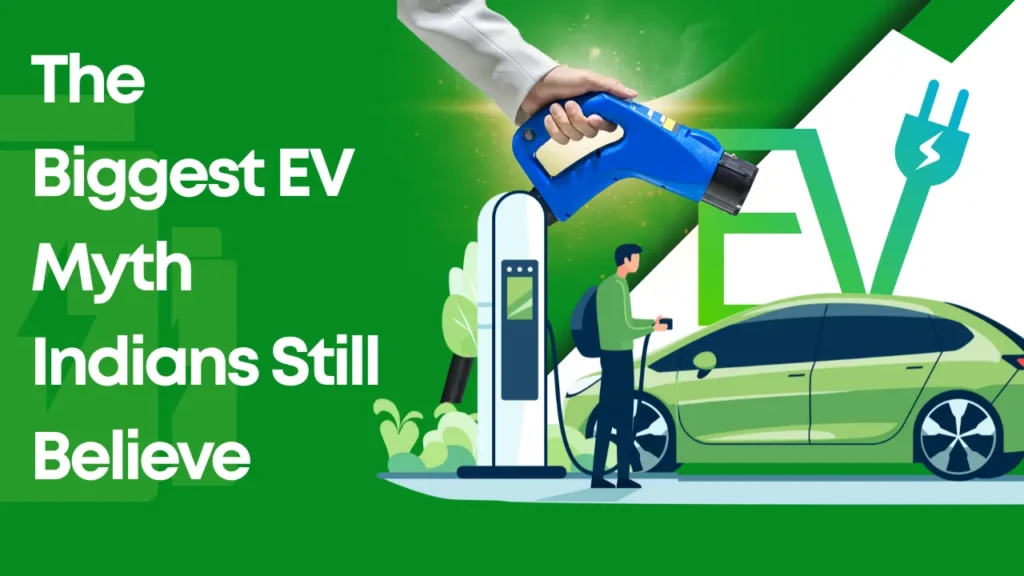
The biggest EV myth Indians still believe is that electric cars are not practical for Indian conditions.
Many people still think EV charging is difficult, range is unreliable, batteries fail quickly, and ownership costs are high.
In reality, most of these fears are based on outdated information, not current facts.
Modern electric cars in India are already well suited for daily driving, especially in cities.
This article explains the EV reality in India using real data, simple language, and practical ownership insights.
Why This EV Myth Still Exists in India
India’s EV journey started slowly. Early electric vehicles had limited range, weak charging support, and unfamiliar technology. As a result, first impressions stuck.
Even today, many people form opinions based on:
- Old EV models from 2017–2019.
- Social media exaggeration.
- Word-of-mouth fear rather than experience.
- Comparisons with petrol cars without full cost analysis.
This is why the EV myth Indians believe continues to survive despite clear improvements in technology and infrastructure.
Understanding the Biggest EV Myth in India Clearly
The biggest electric car myth in India can be summed up as:
“Electric vehicles are risky, inconvenient, and unsuitable for Indian roads.”
This single belief creates multiple EV misconceptions in India, including:
- EV charging in India is unreliable.
- Electric car range in India is too low.
- EV battery life India is short.
- EV maintenance cost India is high.
- Petrol cars are safer long-term.
Each of these assumptions needs to be examined with real numbers.
EV Reality in India: What the Data Actually Shows
Electric vehicle reality India in 2025–2026 is very different from the past.

Daily Driving Reality
According to multiple transport studies and traffic data:
- Average daily driving in Indian cities is 30–40 km.
- Over 85% of car owners drive less than 60 km per day.
- Long highway trips are occasional, not daily.
Modern electric cars in India offer 250–500 km real-world range, which comfortably covers daily needs.
EV Charging in India: Facts vs Fear
EV charging problems India are often exaggerated.
Home Charging Reality
- A standard home charger (3.3 kW or 7.2 kW) can fully charge an EV overnight.
- Charging time: 6–8 hours, done while you sleep.
- Cost per unit of electricity: ₹6–₹9 depending on state.
Home EV charging India handles 90% of daily charging needs for private owners.
Public Charging Reality
- India now has 10,000+ public charging points, growing every quarter.
- DC fast chargers can add 100–150 km range in 20–30 minutes.
- Chargers are available at malls, offices, highways, hotels, and fuel stations.
Electric car charging in India is no longer rare—it is becoming normal.
EV Range Anxiety India: Numbers Tell a Different Story
EV range anxiety India exists mainly because people compare EVs to petrol cars without understanding usage patterns.
Real-World Range Data
- City driving improves EV efficiency due to regenerative braking.
- Stop-and-go traffic actually helps EVs conserve energy.
- Real-world EV range is 15–20% lower than claimed, not 50%.
Even with conservative estimates, EV range reality India supports daily driving comfortably.
EV Cost in India: Purchase Price vs Ownership Cost
Many buyers focus only on upfront cost, ignoring lifetime expense.
Running Cost Comparison
- Petrol car cost per km: ₹6–₹10.
- EV running cost India: ₹1–₹1.5 per km.
For someone driving 1,000 km per month:

- Petrol cost: ₹6,000–₹10,000.
- EV electricity cost: ₹1,000–₹1,500.
That is a monthly saving of ₹5,000–₹8,000.
Why Electric Cars Are Replacing Petrol Cars in India.
Electric Vehicle Ownership Cost India Explained Simply
Ownership cost includes:
- Fuel or electricity
- Servicing
- Repairs
- Long-term wear and tear.
Electric vehicle ownership cost India is lower because:
- No engine oil changes.
- No clutch or gearbox.
- Fewer moving parts
- Lower brake wear due to regeneration.
Over 5 years, EV owners often save ₹3–5 lakh, depending on usage.
EV Battery Life India: What Really Happens Over Time
Battery fear is one of the strongest electric vehicle myths India.
Battery Reality
- Most EV batteries retain 70–80% capacity after 8 years.
- Degradation is gradual, not sudden.
- Thermal management systems protect batteries in Indian climates.
Electric car battery warranty India usually covers:
- 8 years or 1.6 lakh km, whichever comes first.
This alone removes major ownership risk.
EV Maintenance Cost India: Lower Than Petrol Cars
Electric car maintenance India is simpler because:
- No engine
- No transmission
- No exhaust system
- No fuel injection components.
Typical annual service cost:
- Petrol car: ₹8,000–₹15,000
- EV: ₹2,000–₹4,000
EV maintenance cost India is predictable and low.
EV Vs Petrol Cars India: Practical Comparison
EV vs petrol cars India comparison must consider:
- Urban driving conditions.
- Fuel price volatility.
- Maintenance frequency.
- Daily usage patterns.
Electric cars vs petrol cars India:
- EVs excel in cities.
- Petrol cars suit frequent long-distance touring.
- Most Indian users fall into city-centric usage.
For urban households, EV practicality in India is already proven.
Are EVs Practical in India for Daily Use?
Yes. Especially for:
- Office commuting
- School and college travel.
- Shopping and errands.
- Ride-sharing services.
Electric vehicles for daily use India reduce:

- Monthly expenses
- Noise pollution
- Mechanical stress.
Electric cars for city use India perform better than expected.
Why Indians Avoid EVs Despite Clear Benefits
Why Indians avoid EVs is not about technology—it is about psychology.
Main reasons include:
- Fear of being an early adopter.
- Social pressure.
- Limited test-drive exposure.
- Confusing online information.
EV awareness in India is improving, but misinformation spreads faster than facts.
EV Facts vs Myths India: Clear Separation
EV facts vs myths India must be understood clearly.
Facts:
- Charging is manageable.
- Range is sufficient.
- Maintenance is low.
- Running cost is minimal.
Myths:
- EVs fail in traffic
- Batteries die suddenly.
- Charging is impossible.
- EVs are only experimental.
EV truth in India is already visible on roads.
Why Electric Cars Are Now Cheaper Than Petrol Cars in India.
EV Infrastructure in India: Present and Near Future
EV infrastructure India is expanding through:
- Government incentives.
- Private charging operators.
- Real estate integration.
- Highway corridor development.
EV charging network India is growing steadily, not overnight—but consistently.
Electric vehicle future India is infrastructure-driven, and progress is visible.
EV Benefits in India Beyond Cost Savings
EV benefits India include:
- Quiet driving experience.
- Zero tailpipe emissions.
- Reduced urban air pollution.
- Lower dependence on fuel imports.
These benefits improve quality of life, not just finances.
Electric Car Buying Guide India: Practical Advice
First-time EV buyers should:
- Calculate daily usage honestly.
- Ensure home charging access.
- Choose real-world range, not brochure numbers.
- Check service availability locally.
A realistic electric car buying guide India avoids disappointment.
The Final EV Reality Indians Must Accept
The biggest EV myth Indians still believe is no longer relevant in today’s India.

Electric vehicle reality India shows that EVs are:
- Practical
- Affordable
- Reliable
- Ready for daily life
The gap between myth and reality is closing fast.
Car Prices vs Salaries in India.
Conclusion
Electric cars in India are no longer a future concept. They are a present-day solution for millions of drivers. The biggest EV myth in India—that electric vehicles are impractical—comes from outdated assumptions, not current data.
As EV adoption in India grows, real experiences will replace fear. For city users and daily commuters, electric vehicles already make sense today.
What is the biggest EV myth Indians believe?
The biggest EV myth Indians believe is that electric cars are impractical due to charging and range issues.
Are EVs practical in India for daily use?
Yes, electric vehicles are practical in India for daily city driving and commuting.
Is EV charging in India reliable?
EV charging in India is reliable for daily use, especially with home charging.
How serious is EV range anxiety in India?
EV range anxiety India is mostly psychological and not supported by daily driving data.
Is EV maintenance expensive in India?
EV maintenance cost India is significantly lower than petrol cars.
How long do EV batteries last in Indian conditions?
EV battery life India typically lasts 8 years or more with gradual degradation.
Are EVs cheaper than petrol cars long-term?
Yes, electric vehicle ownership cost India is lower over time.
Should first-time buyers consider EVs?
Yes, with proper planning, EVs are an excellent choice for Indian buyers.

Rahul Panchal, 25, is an automotive reviewer with a keen eye for detail and a passion for all things on wheels. Whether it’s cars or bikes, Rahul brings an expert touch to every review, diving deep into performance, design, and the driving experience. With a love for both speed and style, he provides insightful, honest, and engaging reviews that help readers make informed decisions. When he’s not testing out the latest models, Rahul is sharing his thoughts, fueling the excitement for fellow motor enthusiasts with his informative and lively reviews.